



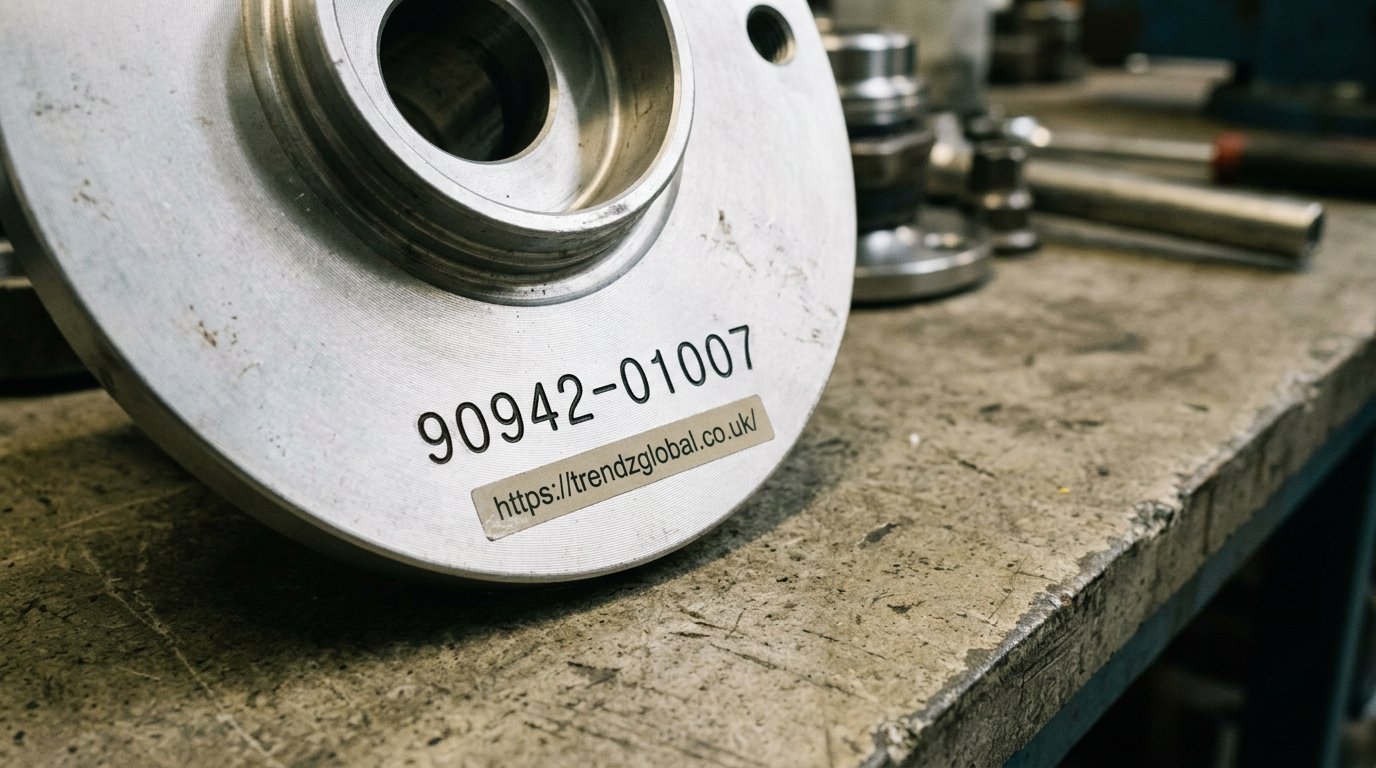
Toyota vehicles are known for long-term reliability, engineering precision, and durable factory components. Even small hardware pieces such as wheel lug nuts are carefully designed to meet strict safety and performance standards. One OEM component that many Toyota owners search online is Toyota part number 90942-01007, a genuine wheel lug nut used across numerous Toyota and Scion models. Although lug nuts may appear simple, they play a critical role in wheel retention, driving stability, suspension alignment, and overall road safety. Toyota 90942-01007
Vehicle owners commonly search for Toyota 90942-01007 when replacing damaged lug nuts, restoring factory wheels, repairing stripped wheel hardware, or upgrading tires and rims. Using the correct OEM wheel hardware is extremely important because Toyota engineers each wheel assembly according to precise torque specifications, wheel seating geometry, and load distribution calculations. This complete guide explains everything about Toyota 90942-01007, including its technical design, compatibility, installation importance, maintenance considerations, and why genuine OEM wheel hardware matters for safe driving performance.
Understanding Toyota OEM Part Number 90942-01007
Toyota uses structured OEM numbering systems to identify original factory components designed specifically for certain vehicle systems. Part number 90942-01007 is officially categorized as a genuine Toyota wheel lug nut or wheel nut assembly used on various Toyota and Scion applications. OEM catalogs also indicate that this part supersedes earlier Toyota wheel nut numbers such as 90080-17035 and 90942-01005, meaning Toyota updated or consolidated the design over time.
OEM part numbers are extremely important because modern automotive hardware is engineered with exact tolerances. Wheel lug nuts must match thread pitch, seat angle, stud dimensions, and wheel mounting geometry precisely. Even small dimensional differences can affect clamping force, wheel centering, and long-term driving stability. Toyota OEM hardware ensures that wheels remain securely attached under acceleration, braking, cornering, and changing road conditions. Toyota 90942-01007
Function of the Wheel Lug Nut in Toyota Vehicles
The primary role of a wheel lug nut is to secure the wheel to the wheel hub assembly by fastening onto threaded wheel studs. When tightened correctly, the lug nut creates a strong clamping force that presses the wheel firmly against the hub mounting surface. This clamping force is what actually holds the wheel in place during vehicle operation.
Toyota engineers wheel systems carefully so that lug nuts distribute pressure evenly around the wheel mounting surface. Properly designed lug nuts also help center the wheel accurately during installation. If incorrect wheel hardware is used, uneven clamping pressure may develop, leading to wheel vibration, brake pulsation, stud fatigue, or loosening over time. This is why Toyota specifies exact OEM wheel hardware for factory wheels and suspension systems. Toyota 90942-01007
Technical Design and Construction of 90942-01007
Toyota 90942-01007 is typically manufactured from hardened automotive-grade steel designed to withstand repeated torque cycles, vibration stress, corrosion exposure, and road impact loads. Genuine Toyota wheel nuts are engineered for long-term durability under demanding driving conditions including highway travel, urban stop-and-go traffic, and rough road surfaces.
The lug nut usually features a tapered-seat or conical-seat design that matches Toyota factory wheel geometry. This tapered surface allows the wheel to center itself accurately during installation while maintaining even clamping pressure around the wheel mounting area. Toyota also applies corrosion-resistant coatings to reduce rust formation and protect the hardware from environmental exposure such as road salt, rain, and humidity.
Compatibility Across Toyota and Scion Models
Toyota OEM databases show that 90942-01007 is compatible with a broad range of Toyota and Scion vehicles spanning multiple generations. Applications may include sedans, compact cars, SUVs, crossover vehicles, and some trucks depending on wheel configuration and production year. Compatibility often extends across vehicles equipped with factory wheel systems using matching stud size and seat geometry. Toyota 90942-01007
However, compatibility depends on several factors including trim level, wheel size, wheel material, and production specifications. Some Toyota vehicles use different lug nut styles depending on whether the vehicle is equipped with steel wheels or alloy wheels. Because of this, VIN-based verification is always recommended before purchasing replacement hardware. Using the exact OEM part ensures proper wheel fitment and prevents installation issues.
Importance of Proper Torque Specifications
Correct wheel lug nut torque is one of the most important safety aspects of vehicle maintenance. Toyota engineers specify exact torque values for each model to ensure sufficient clamping force without overstressing wheel studs or wheel mounting surfaces. Improper torque can create serious safety risks and long-term mechanical problems.
Under-tightened lug nuts may gradually loosen while driving, potentially leading to wheel instability or separation in extreme situations. Over-tightened lug nuts can stretch wheel studs, damage brake rotors, distort wheel surfaces, or make future removal difficult. Professional technicians use calibrated torque wrenches to apply manufacturer-specified torque accurately and evenly during wheel installation.
Common Problems Associated With Lug Nuts
Many Toyota owners search for part number 90942-01007 because of issues involving worn, rusted, or damaged wheel hardware. One of the most common problems is thread damage caused by improper installation or excessive force from high-powered impact tools. Damaged threads can make wheel removal difficult and may compromise wheel security.
Corrosion is another major issue, especially in regions where road salt is used during winter months. Rust buildup can cause lug nuts to seize onto wheel studs, increasing the risk of stud breakage during tire service. Cosmetic damage such as rounded edges or swollen chrome caps on aftermarket lug nuts can also create removal difficulties. Genuine Toyota lug nuts are designed for long-term durability and consistent fitment under repeated service conditions.
OEM vs Aftermarket Lug Nuts
Vehicle owners often compare OEM Toyota wheel hardware with aftermarket alternatives when replacing lug nuts. Genuine Toyota OEM lug nuts are manufactured specifically for Toyota wheel systems and are designed according to factory engineering standards. This ensures proper thread engagement, seat angle accuracy, and long-term torque retention.
Aftermarket lug nuts vary widely in material quality, manufacturing precision, and corrosion resistance. High-quality aftermarket brands can perform effectively when engineered correctly, but lower-grade products may use weaker materials or incorrect seat geometry. Mismatched hardware can affect wheel centering and clamping force consistency. For factory wheel applications, many mechanics and Toyota specialists recommend OEM hardware to maintain original vehicle safety standards. Toyota 90942-01007
Why Genuine Toyota Wheel Hardware Matters
Toyota designs wheel hardware as part of a complete integrated wheel and suspension system. The wheel hub, brake rotor, wheel stud, and lug nut are all engineered to function together under dynamic driving conditions. Genuine Toyota lug nuts are tested for vibration resistance, fatigue strength, and long-term durability under varying road loads.
Counterfeit or poorly manufactured wheel hardware may appear visually similar but often lacks proper metallurgy and manufacturing precision. Inferior materials may weaken over time or fail to maintain consistent torque under stress. Genuine Toyota OEM parts help preserve the original structural integrity and driving stability intended by the manufacturer.
Wheel Maintenance and Inspection Practices
Routine wheel maintenance should include periodic inspection of lug nuts and wheel studs. Tire rotations, brake service, and seasonal tire changes provide opportunities to examine hardware condition and identify early signs of wear or corrosion. Lug nuts showing damaged threads, excessive rust, or physical deformation should be replaced promptly. Toyota 90942-01007
Cleaning wheel mounting surfaces is also important because debris or corrosion between the wheel and hub can affect clamping force distribution. Proper installation procedures include hand-threading lug nuts initially to prevent cross-threading and tightening them gradually in the recommended sequence. These practices help ensure safe wheel retention and long-term reliability.
Installation Procedures and Best Practices
Correct installation technique is essential when replacing Toyota 90942-01007 lug nuts. The wheel and hub mounting surfaces should be clean, dry, and free from rust or debris before installation begins. Lug nuts should always be threaded by hand first to ensure proper alignment and avoid thread damage.
Once the wheel is seated correctly, torque should be applied evenly using the manufacturer’s recommended tightening pattern. This helps distribute pressure uniformly across the wheel mounting surface. After installation, many technicians recommend rechecking lug nut torque after a short driving period to confirm proper seating and torque retention.
Why Toyota Owners Frequently Search for 90942-01007
Toyota owners commonly search for 90942-01007 during wheel replacements, tire upgrades, suspension repairs, or restoration projects. Because Toyota uses precise wheel hardware specifications across different vehicle generations, identifying the correct OEM part number helps eliminate compatibility uncertainty.
This part number also appears frequently in dealership parts catalogs because it replaced earlier Toyota lug nut references over time. Drivers restoring older Toyota vehicles often search this number to maintain factory-correct wheel hardware and preserve original wheel fitment characteristics. Mechanics and tire shops also use OEM references to ensure proper replacement during wheel service procedures.
Long-Term Reliability and Safety Considerations
Although wheel lug nuts are relatively inexpensive components, they play an essential role in long-term vehicle safety and suspension stability. Proper wheel clamping force affects steering response, braking performance, wheel alignment consistency, and overall driving confidence. Small hardware failures can create significant safety risks if ignored. Toyota 90942-01007
Using genuine Toyota wheel hardware helps reduce the likelihood of uneven wheel seating, stud damage, or vibration-related issues. Combined with proper torque procedures and regular maintenance, OEM lug nuts contribute to long-term reliability and safe vehicle operation under daily driving conditions. Toyota 90942-01007
Conclusion
Toyota part number 90942-01007 is a genuine OEM wheel lug nut engineered to provide secure wheel mounting, precise clamping force, and dependable long-term durability across many Toyota and Scion vehicles. Although small in size, this component plays a critical role in vehicle safety, wheel stability, suspension performance, and overall driving reliability. Toyota designed this lug nut specifically to match factory wheel geometry, thread specifications, and torque requirements, ensuring consistent performance under varying road conditions.
