



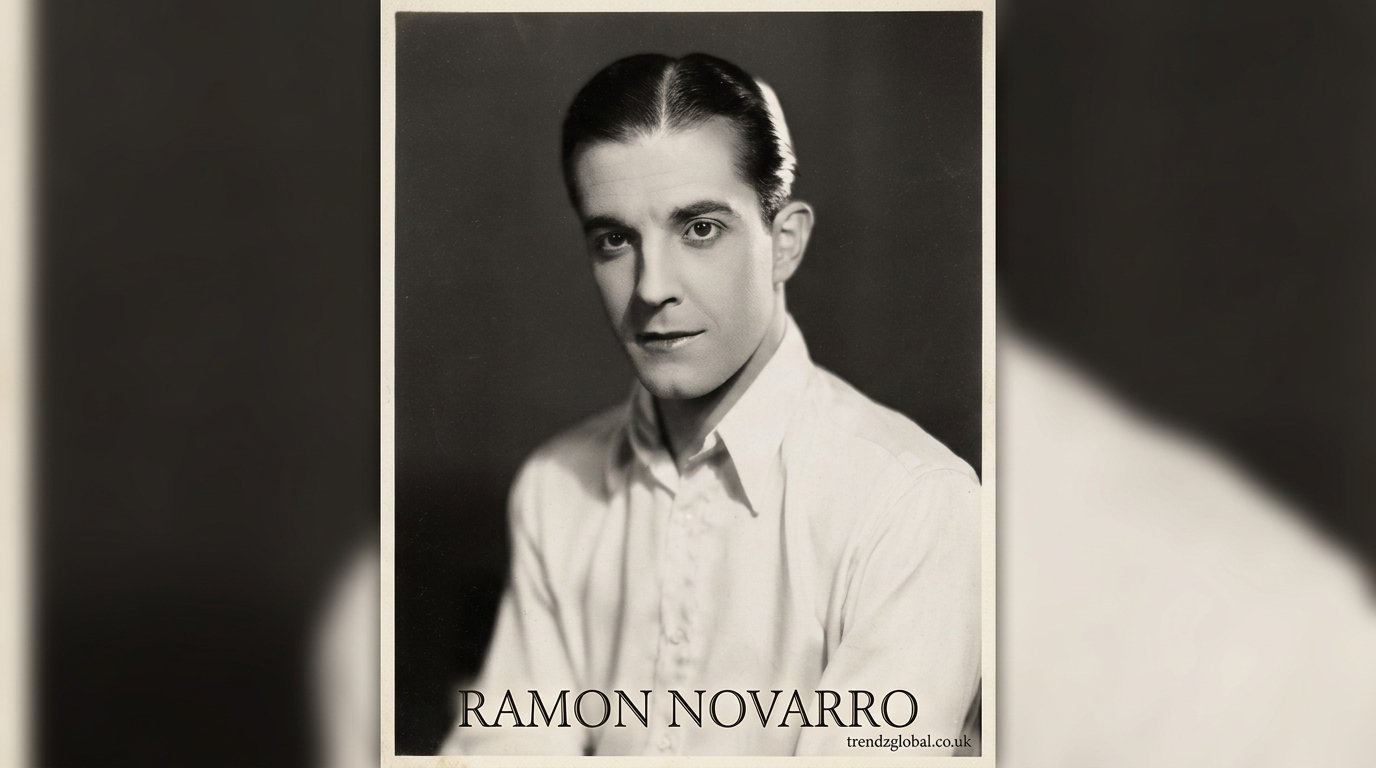
Who Was Ramon Novarro?
Ramon Novarro remains one of the most fascinating figures from the golden age of silent cinema, remembered today as the man who brought Judah Ben-Hur to life on screen decades before Charlton Heston ever took the role. Born Ramón Gil Samaniego, he rose from humble beginnings as a struggling extra to become one of MGM’s biggest box-office draws during the 1920s. His story is not just about fame and glamour, though; it also carries the weight of identity, hidden struggles, and a tragic ending that shocked the entertainment world.
Novarro holds a special place in film history as the first Latin American actor to achieve true stardom in Hollywood. At a time when the industry rarely gave leading roles to performers of Mexican descent, he broke through by sheer talent, discipline, and a magnetic screen presence that audiences could not resist. Understanding his life offers valuable insight into how early Hollywood shaped stardom, identity, and public image, lessons that still resonate in the entertainment industry today.
Early Life and Family Background
Ramon Novarro was born on February 6, 1899, in Durango, Mexico, one of thirteen children in a large and devout Catholic family. His father worked as a dentist, and the household was known for its strong religious values, so much so that three of his sisters eventually became nuns. This upbringing gave young Ramón a deep, lifelong connection to his faith, one that would later clash painfully with other aspects of his personal life.
The family’s comfortable life in Mexico was upended by the Mexican Revolution, a period of violence and instability that forced many wealthy families to flee the country. In 1913, the Samaniego family relocated to Los Angeles, joining a wave of Mexican immigrants seeking safety and new opportunity in the United States. It was in this new environment, far from the world he had known, that Novarro’s path toward the film industry slowly began to take shape.
Interestingly, Novarro was related to two other notable Mexican actresses, Dolores del Río and Andrea Palma, both second cousins of his. This family connection to the entertainment world may have offered subtle encouragement, but Novarro’s early career was anything but glamorous. He worked as a singing waiter, a dancer, and even a piano teacher just to make ends meet while chasing his dream of appearing on screen.
Breaking Into Hollywood
Novarro’s entry into the film industry started modestly in 1917, when he began taking small, uncredited parts in silent films. For nearly five years, he remained largely unnoticed, working as an extra while continuing to perform in stage revues and nightclubs to support himself financially. This long apprenticeship period taught him patience and gave him a genuine understanding of the craft long before fame ever arrived.
His breakthrough came through a chance connection with director Rex Ingram, one of the most respected filmmakers of the silent era. Ingram and his wife, actress Alice Terry, recognized something special in the young performer and began grooming him as a potential rival to Rudolph Valentino, who was then Hollywood’s reigning heartthrob. It was Ingram who suggested he adopt the stage name Novarro, a decision that would soon become one of the most recognized names in American cinema.
Rise to Stardom with Rex Ingram
The partnership between Novarro and Rex Ingram proved to be the turning point of his career. His role in The Prisoner of Zenda in 1922 introduced him to wider audiences, and he continued working with Ingram on several more productions that steadily built his reputation. Each film sharpened his screen presence and confidence, transforming him from an unknown extra into a rising leading man.
The real breakthrough arrived with Scaramouche in 1923, a swashbuckling drama that became his first major hit. Audiences, particularly women, responded strongly to his combination of romantic charm and physical grace, and studio executives quickly took notice. This success led MGM to sign him to a lucrative long-term contract, setting the stage for the role that would define his entire career and cement his place in Hollywood history.
Ben-Hur and the Peak of His Career
In 1925, Ramon Novarro achieved his greatest triumph with Ben-Hur: A Tale of the Christ, an enormous and famously troubled production that became the most expensive silent film made up to that point. He was not the original choice for the lead role, stepping in after production difficulties led to a change in both director and star, yet he delivered a performance widely regarded as one of the finest of the silent era.
The film’s chariot race sequence became legendary, and Ben-Hur turned Novarro into a certified superstar almost overnight. His salary at MGM soared to an extraordinary ten thousand dollars a week, an astonishing figure for the 1920s, reflecting just how valuable he had become to the studio. The film’s success also brought him waves of fan mail, much of it praising both his acting talent and his striking on-screen physique.
Following the untimely death of Rudolph Valentino in 1926, Novarro inherited the mantle of Hollywood’s leading “Latin lover,” a title that shaped much of his subsequent career. He went on to star in popular films such as The Student Prince in Old Heidelberg alongside Norma Shearer and Across to Singapore with Joan Crawford, further proving his box-office appeal throughout the remainder of the silent film era.
Life as MGM’s Leading Latin Lover
Being cast as Hollywood’s premier “Latin lover” came with both privilege and limitation. Novarro enjoyed enormous popularity, financial success, and creative opportunities that few Mexican actors of his time could ever access. Yet the label also confined him to a narrow range of exotic, foreign character roles, and studio executives never allowed him to portray a Mexican character on screen, a reflection of the era’s rigid and often unfair casting practices.
Beyond acting, Novarro was also a genuinely talented singer, and he pursued concert tours across Europe and South America during breaks from filming. He privately believed his singing abilities surpassed his acting skills, even though his film career brought him far greater fame. This dual identity as both actor and vocalist added depth to his public persona and gave him a rare creative outlet outside the confines of Hollywood typecasting.
The Struggle with Talking Pictures
The arrival of sound technology in the late 1920s marked a major turning point for many silent film stars, and Novarro was no exception. His noticeable accent, which had never been an issue in silent films, suddenly became a significant concern for studio executives worried about how audiences would react to talking pictures. Despite these fears, he made a reasonably successful transition, most notably starring opposite Greta Garbo in Mata Hari in 1931, a performance still remembered as one of his finest sound-era roles.
However, as the 1930s progressed, the popularity of the “Latin lover” archetype began to fade, and Novarro’s career gradually slowed down. His contract with MGM was not renewed in 1935, partly due to changing audience tastes and partly because he refused studio pressure to enter into a sham marriage meant to conceal his private life. He continued working sporadically with smaller studios, but he never regained the massive stardom he had enjoyed during the silent film era.
Personal Life and Private Struggles
Ramon Novarro’s personal life was marked by an ongoing internal conflict between his devout Catholic upbringing and his identity as a gay man, something that could not be openly acknowledged in the conservative climate of early Hollywood. This tension contributed to periods of depression and a growing dependence on alcohol as he grew older, struggles that were largely hidden from the public eye during his lifetime.
Despite the pressures of fame and secrecy, Novarro maintained financial stability through wise investments and lived a relatively private, reclusive life after his film career slowed down. He occasionally appeared in television programs such as Bonanza, Dr. Kildare, and The High Chaparral, keeping a modest connection to the entertainment industry even as his glory days as a leading man faded further into the past.
The Tragic Murder of Ramon Novarro
On October 30, 1968, Ramon Novarro’s life ended in a brutal and shocking act of violence. Two brothers, whom he had invited to his Laurel Canyon home, mistakenly believed he kept a large sum of hidden cash inside the house. When Novarro insisted no such money existed, the men subjected him to a prolonged and violent assault that ultimately led to his death by asphyxiation.
The murder made headlines around the world and, tragically, exposed details of his private life that he had spent his entire career trying to conceal. In 1970, the two brothers responsible were convicted of his murder, closing a painful chapter that overshadowed the artistic achievements of his earlier years. His death remains one of the most disturbing true crime stories connected to classic Hollywood.
Legacy and Lasting Influence
Today, Ramon Novarro is remembered as a pioneering figure who paved the way for Latin American actors in an industry that historically offered them very few opportunities. His performance in Ben-Hur continues to be studied and celebrated as a landmark achievement of silent cinema, and film historians widely regard him as one of the most talented leading men of his generation.
His story has been the subject of several biographies, including Beyond Paradise by André Soares and works by Allan R. Ellenberger, which explore both his professional triumphs and personal hardships in greater depth. Novarro has also earned a permanent place on the Hollywood Walk of Fame, a lasting tribute to his contributions to American cinema.
Beyond his filmography, Novarro’s life serves as an important reminder of the personal sacrifices many early Hollywood stars made to survive in an industry that demanded conformity. His journey from a refugee fleeing revolution to one of the biggest stars of the silent era remains a compelling and important piece of Hollywood history, one that continues to resonate with new generations discovering classic cinema for the first time.
