



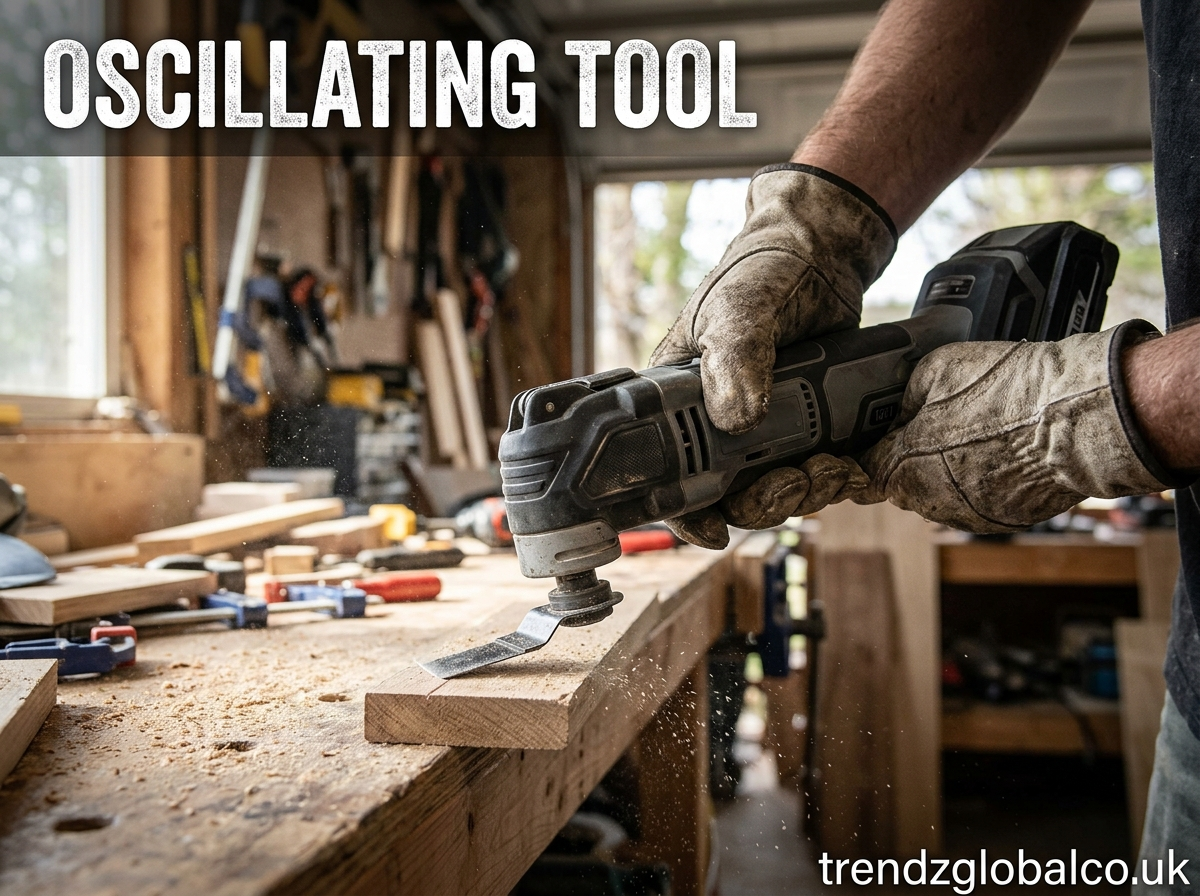
An oscillating tool is a compact power tool made for cutting, sanding, scraping, trimming, and other repair jobs. Its small head can reach places where larger saws and sanders often cannot. With the right attachment, the same tool can cut wood, remove grout, scrape adhesive, sand a tight corner, or make a flush cut.
For homeowners and DIY users, an oscillating tool can be useful for repair and remodeling work. Carpenters, electricians, plumbers, and other tradespeople also use it for detailed cuts and jobs that require access to narrow spaces.
The key to getting good results is choosing the right attachment, setting a suitable speed, and keeping the tool under control.
What Is an Oscillating Tool?
An oscillating tool is a handheld power tool with a small attachment that moves rapidly from side to side through a short arc. Unlike a circular saw, the blade does not spin around continuously. Instead, it makes a rapid back-and-forth movement.
This movement allows the tool to work with a wide range of attachments. A cutting blade can be used for wood or metal, while a sanding pad turns the same tool into a small detail sander. Scraper blades can remove adhesive or old material, and grout blades can be used for grout removal.
Many current models have variable-speed controls. This lets the user change the operating speed according to the material and task. For example, a slower setting can give better control for some delicate work, while a higher setting can help with certain cutting and sanding jobs. Makita models, for example, offer variable-speed controls with ranges such as 6,000 to 20,000 oscillations per minute.
The tool is sometimes called an oscillating multi-tool because one motor can handle many different jobs when fitted with the correct accessory.
What Is an Oscillating Tool Used For?
The main reason people buy an oscillating tool is its ability to handle several types of work with one compact machine.
Cutting Wood
An oscillating tool can make plunge cuts and flush cuts in wood. This can be useful when installing flooring, trimming door jambs, cutting openings, or modifying wooden parts during renovation work.
A plunge cut is particularly useful when you need to start a cut in the middle of a material rather than from an exposed edge.
Cutting Metal
With a suitable metal-cutting blade, an oscillating tool can cut certain metal parts, screws, nails, pipes, and other small pieces. Blade selection matters because wood blades are not designed for cutting metal.
Some blades are made specifically for wood containing nails, while others are intended for metal or mixed materials.
Sanding
A triangular sanding pad can turn the tool into a detail sander. It works well around corners and in small areas where a larger random-orbit sander may be difficult to position.
It can be useful for smoothing edges, preparing surfaces, and working in corners.
Scraping
A scraper attachment can remove old adhesive, paint residue, caulk, flooring material, and other unwanted substances. The correct blade and technique depend on the material being removed.
For scraping jobs, avoid pressing too hard. Let the attachment do the work while you guide the tool.
Removing Grout
A grout-removal attachment can help remove old grout from tiled areas. This can be helpful when replacing damaged tiles or repairing sections of a tiled surface.
The operator needs to control the depth carefully so the tool does not damage the surrounding tile.
Trimming Door Frames
One common renovation job is cutting the bottom of a door frame or jamb so flooring can fit underneath. An oscillating tool is well suited to this type of flush cut because its blade can work close to the floor.
Removing Adhesive and Old Materials
Scraper attachments can also help remove stuck flooring adhesive, labels, sealants, and other residues. The result depends heavily on the blade type and the condition of the material.
DEWALT lists detail sanding, plunge cutting, flush cutting, removal of excess material, and surface preparation among the intended uses of one of its oscillating multi-tools.
How Does an Oscillating Tool Work?
Inside the tool, the motor creates a rapid oscillating movement that is transferred to the accessory at the front. The attachment moves through a small angle rather than making a full rotation.
This short movement is what allows an oscillating tool to work in tight areas. The blade can be positioned close to walls, floors, cabinets, pipes, and other objects.
Different models have different oscillation angles, speed ranges, motors, and control systems. Some use a simple variable-speed trigger, while others have a speed dial or multiple preset speeds.
The best setting depends on the material and attachment. Starting at a moderate speed gives you time to see how the material reacts before increasing the speed.
Do not force the tool through a material. Excessive pressure can make cutting harder, increase heat, wear the blade faster, and reduce your control.
Types of Oscillating Tools
Oscillating tools mainly fall into two groups: corded and cordless.
Corded Oscillating Tools
A corded model gets its power from an electrical outlet. It can be a good choice for a workshop or renovation area where an outlet is easy to reach.
The main advantage is that you do not need to stop to recharge a battery. A corded tool can also be useful for long jobs where continuous power is preferred.
The downside is the power cord. It can restrict movement and needs to be kept away from the cutting area.
Cordless Oscillating Tools
Cordless models run on rechargeable batteries. They are convenient for working in rooms, garages, outdoor areas, or construction sites where a power outlet may not be close.
Battery systems also allow users who already own tools from the same brand to share compatible batteries across equipment.
The tradeoff is battery runtime and the need to recharge or carry spare batteries. Battery size, tool design, material being cut, and working conditions all affect runtime.
Modern cordless models are available with features such as brushless motors, variable-speed controls, quick-change systems, and vibration reduction.
Oscillating Tool Blades and Attachments
The attachment is one of the most important parts of an oscillating tool. The motor may be capable of many jobs, but the wrong blade can give poor results or damage the material.
Wood-Cutting Blades
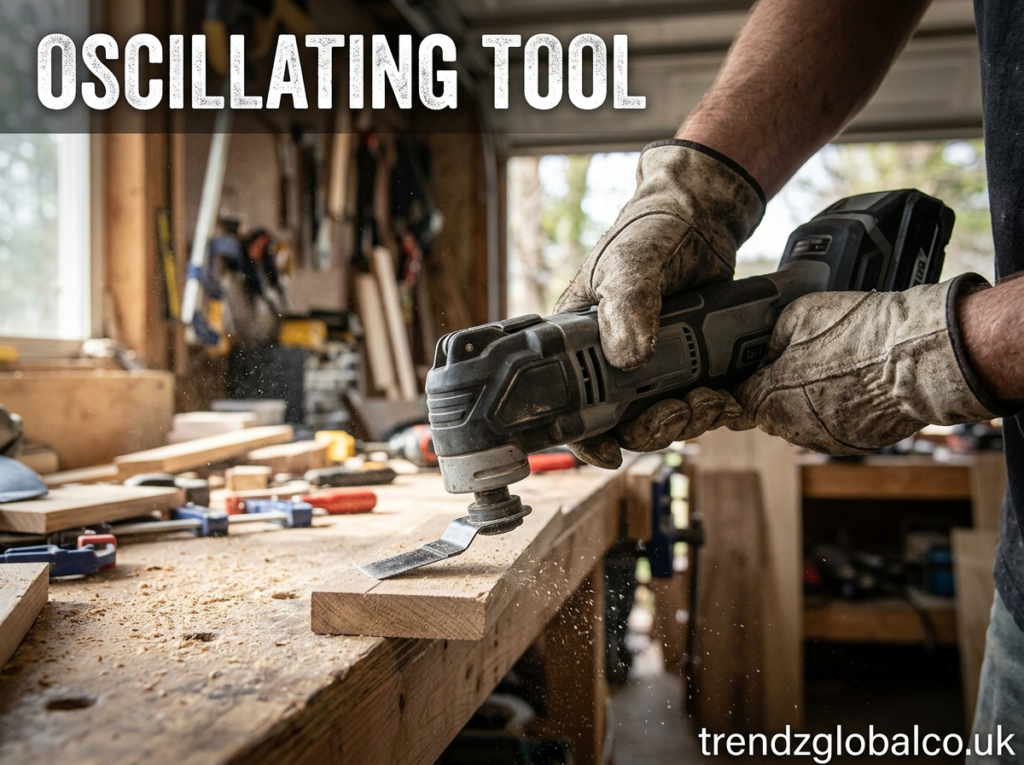
These blades are designed for cutting wood and wood-based materials. Some versions are made for clean wood, while others are designed for wood containing nails.
Metal-Cutting Blades
Metal blades are designed for cutting suitable metal materials. Some are made from materials such as bi-metal construction for tougher cutting applications.
Sanding Pads
Sanding pads usually have a triangular shape that helps them reach corners. They are useful for detail sanding and small surface-preparation jobs.
Scraper Blades
Scrapers are useful for removing adhesive, old sealant, paint residue, and other materials. A rigid scraper and a flexible scraper can behave differently, so choose according to the job.
Grout Blades
Grout-removal blades are designed for removing grout from tiled surfaces. They require careful handling because aggressive work can damage nearby tile.
Universal and Brand-Specific Attachments
Not every attachment fits every tool in exactly the same way. Some manufacturers offer adapters or universal accessory systems. Before buying blades, check the connection system used by your particular model.
For example, DEWALT offers tools with universal accessory adapters, while some Makita models use specific Starlock systems.
How to Choose the Right Oscillating Tool
The best oscillating tool depends on the type of work you expect to do.
Power Source
Choose corded if you mainly work near outlets and expect long periods of continuous use. Choose cordless if mobility matters more.
Speed Control
Variable speed is useful because different materials and attachments may require different operating speeds. A tool with adjustable speed gives you more control than one that runs at a single setting.
Motor Type
Some models use brushed motors, while others use brushless motors. Brushless designs are common in newer cordless tools and can offer longer runtime and reduced maintenance compared with brushed designs.
Vibration
Oscillating tools naturally produce vibration because the attachment moves rapidly. If you expect to use the tool for long periods, pay attention to vibration control and the shape of the grip.
Some manufacturers now include systems designed to reduce vibration during operation.
Weight and Grip
A lighter tool can be easier to control during overhead or detailed work. A comfortable grip also matters because your hand may be holding the tool for several minutes at a time.
Accessory Compatibility
Check which blades and attachments fit the tool before buying. A wider selection of compatible accessories gives you more options for future projects.
Blade Change System
Some models have tool-free blade-change systems. This can save time when switching between cutting, sanding, and scraping attachments.
