



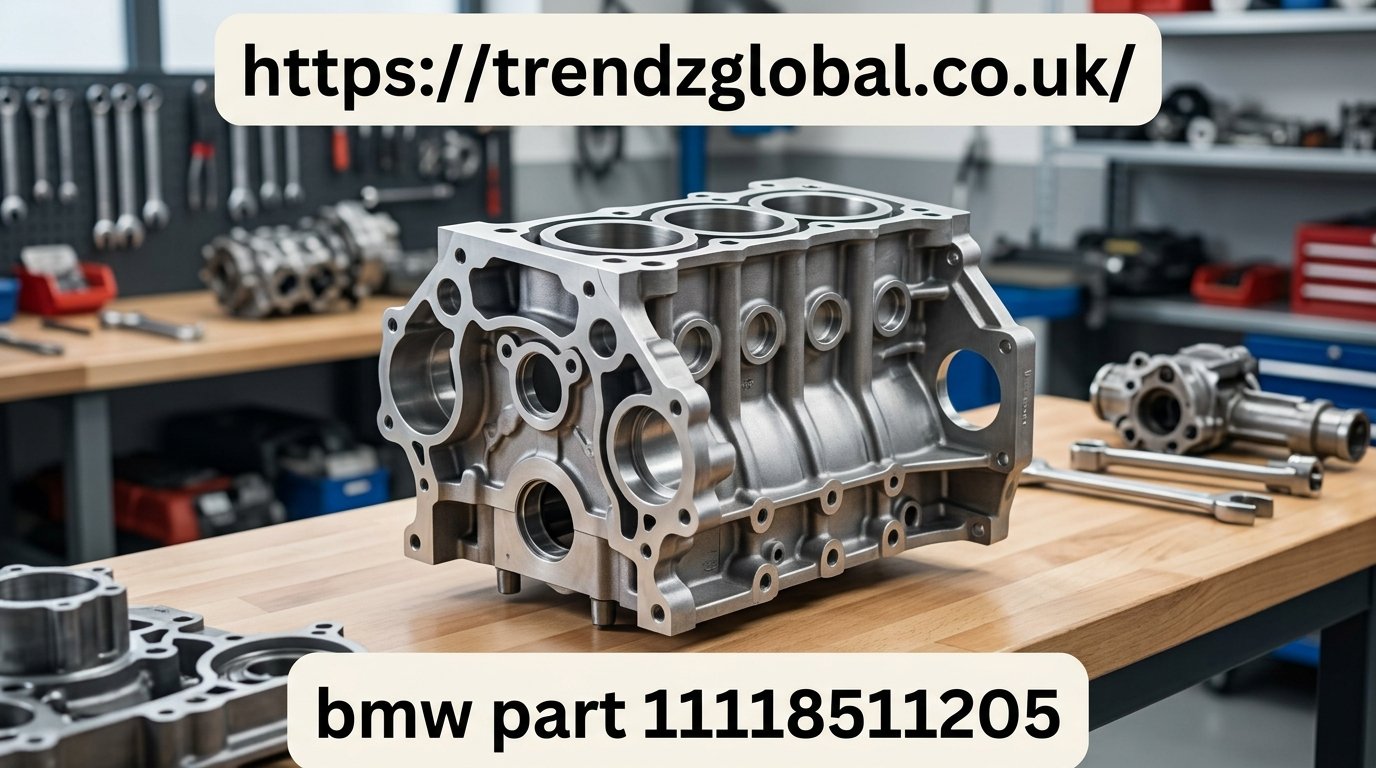
BMW part number 11118511205 is a genuine OEM coolant system connector used in several modern BMW turbocharged engines. Although small in size, this component plays a major role in maintaining proper coolant circulation, engine temperature regulation, and overall cooling system efficiency. Many BMW owners search for this part number after noticing coolant leaks, low coolant warnings, overheating symptoms, or cooling system performance problems in vehicles equipped with BMW’s newer modular engines.
Modern BMW engines rely heavily on advanced thermal management systems. Turbocharged direct-injection engines operate under higher temperatures and pressures than older naturally aspirated engines, which means every cooling system component must function precisely. The BMW 11118511205 connector is engineered to create a sealed coolant pathway between engine cooling passages and coolant hoses, helping regulate engine operating temperature under all driving conditions.
This part is commonly found in BMW models equipped with B46 and B48 turbocharged engines, including the BMW 230i, 330i, X1, X2, 430i, and several hybrid or performance-oriented variants. Depending on the supplier, the component may be described as a coolant connector, coolant flange, radiator flange, or hose connector. Despite these naming variations, the part serves the same fundamental purpose within the cooling system.
Understanding how this component works, why it fails, and how it affects overall engine reliability is important for BMW owners interested in preventative maintenance and long-term vehicle performance.
Understanding the Purpose of BMW Part 11118511205
BMW part 11118511205 functions as a coolant system connector designed to route engine coolant between cooling hoses and engine passages. In turbocharged BMW engines, coolant flow is critical because excessive heat can damage internal engine components, reduce efficiency, and negatively affect emissions performance.
The connector is positioned within the engine cooling circuit where it helps maintain sealed coolant movement under pressure. Modern BMW cooling systems operate as closed pressurized systems, meaning coolant must remain sealed throughout the engine, radiator, thermostat, heater core, and associated coolant lines.
This connector is engineered using heat-resistant reinforced composite materials capable of handling repeated thermal cycling. As the engine heats and cools during operation, the cooling system expands and contracts continuously. Components like the 11118511205 connector must withstand these changes while maintaining structural integrity and leak-free operation.
Although the component itself may appear minor, coolant connectors are essential because even small coolant leaks can gradually reduce system pressure and cooling efficiency. Over time, unresolved coolant loss can lead to overheating, poor engine performance, and expensive mechanical damage.
BMW engineers design cooling system connectors carefully because temperature management directly affects engine reliability, turbocharger performance, fuel economy, and emissions control.
BMW Cooling System Design and Thermal Management
BMW’s modern cooling systems are significantly more advanced than traditional automotive cooling systems from earlier decades. Turbocharged engines such as the B46 and B48 generate substantial heat due to increased combustion pressure, direct fuel injection, and turbocharger operation.
To manage this heat effectively, BMW uses electronically controlled cooling systems with precision coolant routing, variable coolant pumps, and sophisticated temperature management strategies. The cooling system must maintain ideal operating temperatures under city driving, highway cruising, and aggressive acceleration.
The 11118511205 connector contributes to this process by ensuring uninterrupted coolant flow between engine components and cooling hoses. Proper coolant circulation helps absorb heat from the cylinder head, engine block, turbocharger assembly, and other high-temperature areas.
BMW engines are designed to operate at relatively high temperatures to improve fuel efficiency and reduce emissions. Because of this, cooling system integrity becomes especially important. Any leak or pressure loss can reduce cooling performance and cause engine temperatures to rise beyond safe limits.
The cooling system also supports climate control and cabin heating functions, meaning coolant circulation affects both engine performance and passenger comfort.
Modern BMW thermal management systems therefore depend heavily on reliable coolant connectors, flanges, and hose assemblies.
Vehicle Compatibility and Common BMW Applications
BMW part number 11118511205 is associated with a large number of BMW models produced primarily from the mid-2010s onward. The part is commonly linked to vehicles equipped with BMW’s modular B-series turbocharged engines, especially the B46 and B48 four-cylinder platforms.
Vehicles commonly associated with this part include the BMW 230i, 330i, 430i, X1, X2, and several additional F-chassis and G-chassis models. Hybrid variants such as the BMW 330e may also utilize this component because thermal management is particularly important in electrified powertrain systems.
BMW’s modular engine strategy allows many components to be shared across different vehicle platforms. As a result, the same coolant connector may appear in sedans, coupes, SUVs, and crossover models using similar engine architecture.
The component is frequently installed near the cylinder head or coolant hose assembly where coolant routing connections are required. Exact placement may vary depending on engine configuration and vehicle layout.
Because BMW updates engine components during production cycles, owners should always confirm compatibility using VIN-specific OEM parts catalogs before purchasing replacement components. Small production changes may alter connector design, hose routing, or mounting configurations.
Understanding vehicle compatibility is essential because using incorrect cooling system components can lead to improper sealing or installation problems.
Common Symptoms of Cooling System Connector Failure
One of the most common reasons BMW owners search for part number 11118511205 is coolant leakage. Over time, the connector may develop cracks, seal deterioration, or weakened connection points caused by heat exposure and pressure cycling.
Early signs of failure often include a faint coolant smell after driving or small coolant residue deposits around engine cooling components. Drivers may notice white or blue crust-like buildup near hose connections where coolant has slowly leaked and evaporated.
Low coolant warning messages are another common symptom. BMW vehicles use electronic coolant monitoring systems that alert drivers when coolant levels fall below safe operating thresholds. A slow leak from the connector may gradually reduce coolant levels over days or weeks.
In more advanced cases, overheating warnings may appear if coolant loss becomes severe enough to reduce cooling system efficiency. Engine overheating should always be treated seriously because excessive heat can damage cylinder heads, head gaskets, turbochargers, and internal engine components.
Some owners also report intermittent coolant odor without obvious visible leakage. Small leaks may only occur when the cooling system reaches full operating pressure during highway driving or aggressive acceleration.
Recognizing these symptoms early can help prevent larger cooling system failures and expensive engine repairs.
Why BMW Cooling Components Fail Over Time
Modern BMW cooling systems use lightweight composite materials extensively to reduce weight and improve manufacturing efficiency. While these materials perform well under normal operating conditions, repeated heat cycles eventually contribute to material fatigue and aging.
Every time the engine heats up and cools down, coolant system components expand and contract. Over thousands of cycles, stress gradually weakens plastic connectors, seals, and hose fittings.
Turbocharged engines increase this stress because operating temperatures are higher than those found in older naturally aspirated engines. Components positioned near the turbocharger or cylinder head experience especially intense thermal exposure.
Coolant chemistry also plays a major role in component longevity. BMW specifies specialized coolant formulas designed to protect aluminum engine components and composite cooling materials. Using incorrect coolant mixtures may accelerate corrosion or degrade seals.
Environmental conditions can further contribute to wear. Vehicles exposed to extreme heat, freezing temperatures, road salt, or heavy traffic may experience faster cooling system aging.
Because of these factors, many BMW specialists recommend preventative cooling system inspections once vehicles reach higher mileage or several years of operation.
OEM BMW Parts Versus Aftermarket Replacements
When replacing cooling system components, BMW owners often choose between genuine OEM parts and aftermarket alternatives. Genuine BMW part 11118511205 is manufactured to exact factory specifications for fitment, pressure resistance, and durability.
OEM components are designed specifically for BMW cooling system operating conditions, including pressure tolerances, material composition, and sealing performance. This helps ensure proper installation and long-term reliability.
Several aftermarket manufacturers also produce compatible coolant connectors and flanges for BMW applications. Some aftermarket suppliers advertise reinforced composite materials or upgraded construction intended to improve durability over factory components.
However, aftermarket quality can vary significantly. Lower-quality parts may not seal properly or may degrade more quickly under repeated thermal stress. Cooling system reliability is extremely important in turbocharged BMW engines, making component quality a critical consideration.
Many BMW technicians recommend OEM cooling components because the cost difference is relatively small compared to the potential expense of overheating-related engine damage.
Choosing high-quality replacement parts helps maintain cooling system stability and reduces the risk of future coolant leaks.
Installation Process and Cooling System Bleeding
Replacing BMW coolant connectors requires careful installation procedures because modern BMW cooling systems are sensitive to trapped air and improper coolant bleeding.
Before removal, technicians must safely depressurize the cooling system to prevent coolant spray or injury. Once the old connector is removed, surrounding hoses and sealing surfaces are inspected for wear, contamination, or damage.
After installation, the cooling system must typically be refilled using BMW-approved coolant mixtures. Many newer BMW models use electric water pumps and electronically controlled coolant circulation systems that require specific bleeding procedures.
Improper bleeding may leave air pockets trapped inside the cooling system. Air pockets can reduce coolant circulation, create temperature fluctuations, and cause overheating even when coolant levels appear normal.
Some BMW vehicles include automatic bleeding functions activated through ignition sequences or diagnostic systems. Experienced BMW technicians usually follow manufacturer procedures carefully to ensure complete air removal from the cooling circuit.
Because cooling system servicing can be complex on modern BMW engines, professional installation is often recommended for owners unfamiliar with BMW-specific repair procedures.
Preventive Maintenance and Long-Term Cooling System Reliability
Preventive maintenance is one of the most important aspects of BMW cooling system ownership. Components like the 11118511205 connector may fail gradually, making early detection essential for preventing major repairs.
Routine inspections help identify coolant residue, hose deterioration, or small leaks before they become serious. Checking coolant levels regularly is especially important because unexplained coolant loss often indicates early cooling system problems.
Many BMW enthusiasts proactively replace aging cooling system components once vehicles reach higher mileage. Preventative replacement of coolant connectors, hoses, thermostats, and expansion tanks helps reduce the risk of sudden cooling system failures.
Using the correct BMW-approved coolant is equally important. Proper coolant chemistry protects seals, lubricates internal components, and helps prevent corrosion throughout the engine cooling system.
Regular maintenance also improves long-term engine performance because stable operating temperatures help maintain efficient combustion, turbocharger reliability, and consistent emissions performance.
BMW engines can deliver excellent long-term reliability when cooling systems are maintained properly and coolant leaks are addressed quickly.
BMW Owner Experiences and Cooling System Discussions
BMW owner forums and enthusiast communities frequently discuss cooling system maintenance because coolant leaks are among the more common issues encountered in aging turbocharged BMW vehicles.
Many owners describe gradual coolant loss as one of the first warning signs associated with cooling system connector deterioration. Discussions often emphasize the importance of diagnosing leaks early before overheating occurs.
Experienced BMW enthusiasts commonly recommend preventative cooling system maintenance around 60,000 to 100,000 miles depending on driving conditions and vehicle age. Replacing vulnerable cooling components proactively is viewed as an effective strategy for preserving long-term engine reliability.
Owners also frequently discuss the importance of using OEM-quality components during cooling system repairs. Cheap aftermarket cooling parts are sometimes associated with fitment issues or premature failure.
These real-world experiences reinforce the importance of understanding BMW cooling system behavior and maintaining cooling system integrity over the life of the vehicle.
Conclusion
BMW part number 11118511205 is a genuine OEM coolant connector and flange component designed for use in several modern BMW turbocharged engines. Although physically small, it performs a critical role in maintaining coolant circulation, cooling system pressure, and stable engine operating temperatures.
