



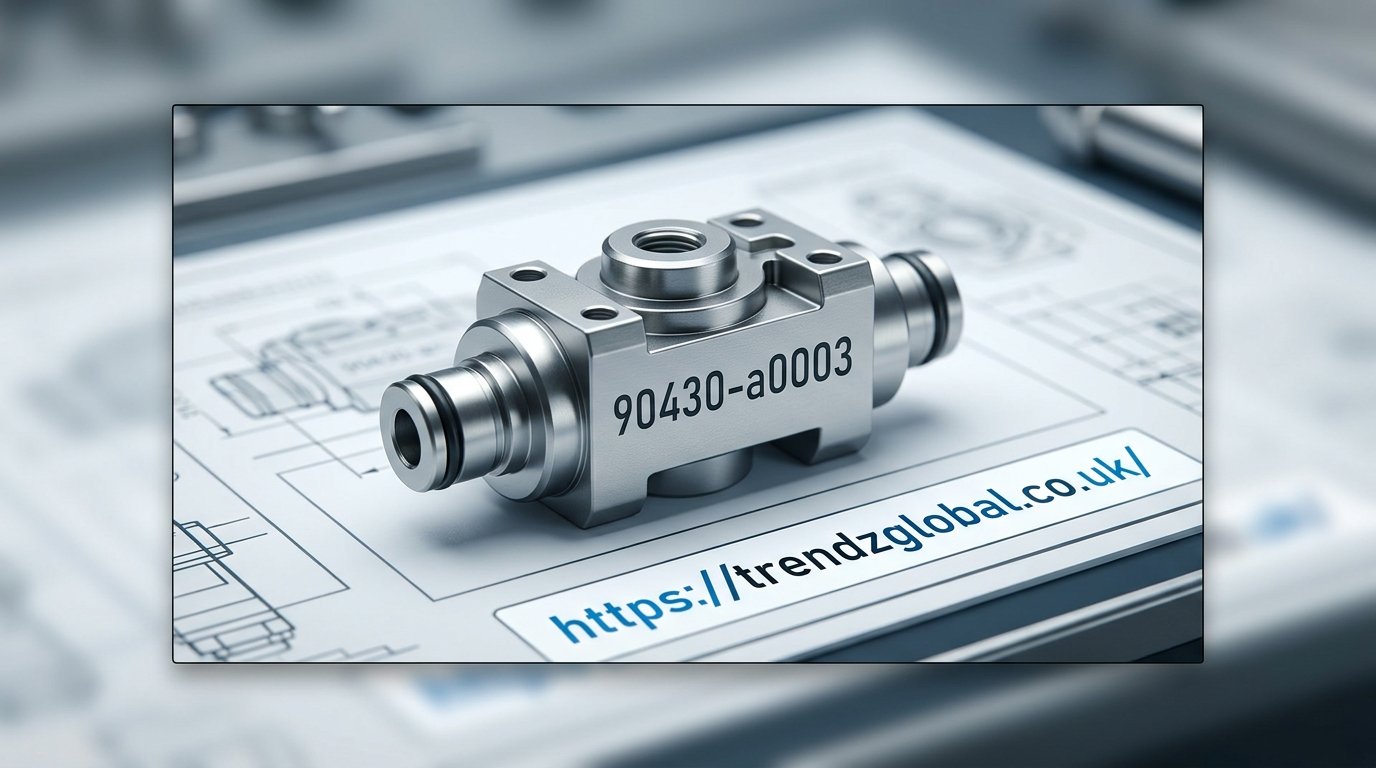
The OEM part number 90430-A0003 is commonly searched by vehicle owners, mechanics, and auto parts buyers who are trying to identify an exact replacement component for maintenance or repair purposes. Like many automotive part numbers, it belongs to a structured coding system used by manufacturers to organize and track individual vehicle components with precision. These codes are essential in ensuring that the correct part is matched with the correct vehicle model, production year, and technical specification.
In the automotive industry, even a small variation in part numbers can represent differences in size, design, material, or compatibility. That is why understanding a part like 90430-A0003 requires more than just a surface-level search. It involves learning how OEM numbering works, how compatibility is verified, and how buyers can ensure they are purchasing the correct component for long-term reliability and performance.
What is the 90430-A0003 Part Number in Automotive Systems
The part number 90430-A0003 is an OEM-style identifier used within automotive manufacturing systems to label a specific vehicle component. OEM stands for Original Equipment Manufacturer, meaning the part is designed either by the vehicle manufacturer or produced according to their strict specifications. These parts are typically used during vehicle assembly or offered as official replacement components.
Although exact interpretations of part numbers can vary depending on the manufacturer’s internal coding system, numbers in this format are generally linked to categorized vehicle systems such as body hardware, clips, fittings, covers, or functional mechanical components. The structure of the code helps manufacturers, dealerships, and repair centers quickly locate the correct part within extensive automotive databases.
How OEM Automotive Part Numbering Systems Work
Automotive OEM numbering systems are designed to create order within extremely large inventories of vehicle components. Each segment of a part number can represent a category, subcategory, or design revision. This structured approach allows manufacturers like Hyundai, Kia, Toyota, and others to manage thousands of components efficiently across different vehicle models and production years.
In most cases, a number like 90430-A0003 is not random. It is part of a controlled catalog system where similar prefixes may represent related component groups. The suffix often indicates variations in design, revision updates, or compatibility differences. This ensures that even closely related parts can be distinguished accurately to prevent installation errors.
Possible Applications of 90430-A0003 in Vehicle Components
While exact fitment details for 90430-A0003 should always be verified through official catalogs or VIN lookup tools, part numbers in this format are often associated with specific mechanical or structural vehicle elements. These may include small but essential components that support larger systems within the vehicle.
In many automotive systems, such parts can be linked to body trim assemblies, fastening components, protective covers, or mounting hardware. These elements play an important role in maintaining vehicle integrity, reducing vibration, protecting internal systems, and ensuring proper assembly alignment. Even though they may appear minor, such components are critical for overall vehicle performance and durability.
Importance of VIN-Based Compatibility Checks
One of the most reliable ways to confirm whether 90430-A0003 is suitable for a specific vehicle is by using the Vehicle Identification Number (VIN). The VIN is a unique code assigned to every vehicle and contains detailed information about its manufacturer, model, engine type, production year, and configuration.
Using a VIN lookup system ensures that the selected part matches the exact factory specifications of the vehicle. This is especially important because automotive manufacturers often release multiple variations of the same component across different production batches. Without VIN verification, there is a risk of ordering an incompatible part that may not fit or function correctly.
Common Issues That Require OEM Part Replacement
In automotive maintenance, OEM parts like 90430-A0003 are often replaced due to wear and tear, accidental damage, or aging materials. Over time, exposure to heat, vibration, moisture, and road conditions can degrade even durable components, leading to reduced performance or physical failure.
When such components fail, vehicle owners may notice symptoms such as loose fittings, unusual vibrations, improper alignment, or visible damage to surrounding assemblies. While these symptoms do not always indicate a major mechanical issue, replacing small OEM parts early can help prevent larger and more expensive repairs in the future.
Installation and Replacement Process Overview
Replacing a component like 90430-A0003 typically involves basic mechanical procedures, although the complexity depends on the exact location and function of the part. In many cases, installation may require removing adjacent panels, fasteners, or protective covers to access the component safely.
Professional mechanics often follow manufacturer service manuals to ensure correct installation torque, alignment, and placement. For DIY users, careful handling is essential because incorrect installation can lead to poor fitment or damage to surrounding parts. Proper tools and correct part identification are key to a successful replacement process.
OEM vs Aftermarket Parts for 90430-A0003
When replacing automotive components, buyers often choose between OEM and aftermarket options. OEM parts like 90430-A0003 are manufactured according to the original specifications set by the vehicle manufacturer, ensuring precise fitment, consistent quality, and long-term reliability.
Aftermarket parts, on the other hand, are produced by third-party manufacturers and may vary in material quality, design accuracy, and durability. While aftermarket options are often more affordable, they may not always match OEM standards. For critical vehicle systems or precision-fit components, OEM parts are generally preferred to maintain factory-level performance.
Pricing Factors and Market Availability
The price of OEM automotive parts such as 90430-A0003 can vary depending on several factors, including manufacturer pricing policies, regional availability, shipping costs, and supply chain conditions. Parts that are less commonly stocked may also have higher prices due to limited distribution.
Availability can also differ between official dealerships, authorized distributors, and online auto parts platforms. In some cases, customers may need to order the part directly from the manufacturer or wait for international shipping. Market demand and vehicle popularity also play a role in determining how easily a specific part can be sourced.
How to Verify Authenticity of OEM Parts
Ensuring that 90430-A0003 is an authentic OEM part is essential for performance and safety. Genuine parts typically come with manufacturer packaging, official labeling, and identifiable part numbers that match OEM databases. Many manufacturers also include QR codes, holograms, or verification labels to prevent counterfeit distribution.
Buyers should be cautious when purchasing from unofficial sellers or unverified online marketplaces, as counterfeit automotive parts can closely resemble genuine ones but lack proper material quality and durability. Verifying the seller’s reputation and cross-checking the part number with official catalogs helps reduce the risk of purchasing incorrect or fake components.
Maintenance Importance of Proper OEM Replacement
Using correctly matched OEM parts like 90430-A0003 contributes significantly to long-term vehicle maintenance. Proper replacement ensures that all connected systems continue functioning as intended without unnecessary strain or misalignment. This helps preserve vehicle safety, efficiency, and structural integrity over time.
Regular inspection and timely replacement of worn components also reduce the likelihood of larger mechanical failures. Automotive experts emphasize that small OEM parts often play supporting roles in larger systems, meaning their condition can indirectly impact overall vehicle performance and reliability.
Conclusion
The OEM part number 90430-A0003 represents a structured automotive identification code used to define a specific vehicle component within a manufacturer’s system. While exact application details should always be confirmed through official catalogs or VIN-based lookup tools, understanding how such part numbers work is essential for accurate vehicle maintenance and repair decisions.
